

wHY REMOVERITE?
THE QUESTION
It comes down to control, efficiency, and results.
Hammering relies on impact and force. Drilling relies on precision and control. While nails are widely available and familiar, their installation and removal place stress on forms and green concrete. Removal often requires prying or pulling, increasing the risk of damage and rework.
Screws installed with a drill allow faster placement, cleaner removal, and significantly less force on the finished work. For temporary concrete forms, where clean release matters, drilling offers a more predictable and controlled outcome.
The question is no longer which method works, but which one protects the final result.
THE NAIL
For decades, contractors relied on double‑headed nails for concrete forming. These nails provided holding strength while leaving a raised head exposed, making them easier to pull once the concrete cured.
The concept worked but not without cost.
Removing nailed forms requires force. That force is transferred directly into the form and the fresh concrete. Bent nails, damaged edges, blown‑out corners, and broken form boards were common, often leading to rework or complete tear‑outs. In many cases, nails could not be reused due to bending or deformation during removal.
The design solved one problem, but introduced others.
THE HAMMER
The widespread adoption of cordless screw guns marked a turning point in construction. Screws offered faster installation, better control, and significantly easier removal. Contractors quickly recognized the advantage: less force, more precision, cleaner results.
However, traditional single‑head screws created new challenges in concrete forming. Screw heads could become countersunk, buried under concrete slurry, or difficult to locate during removal. Temporary fixes were inconsistent and unreliable.
While drilling was clearly better than hammering, the fasteners themselves had not caught up.
A Better Way to Fasten Forms
The solution was simple—but intentional.
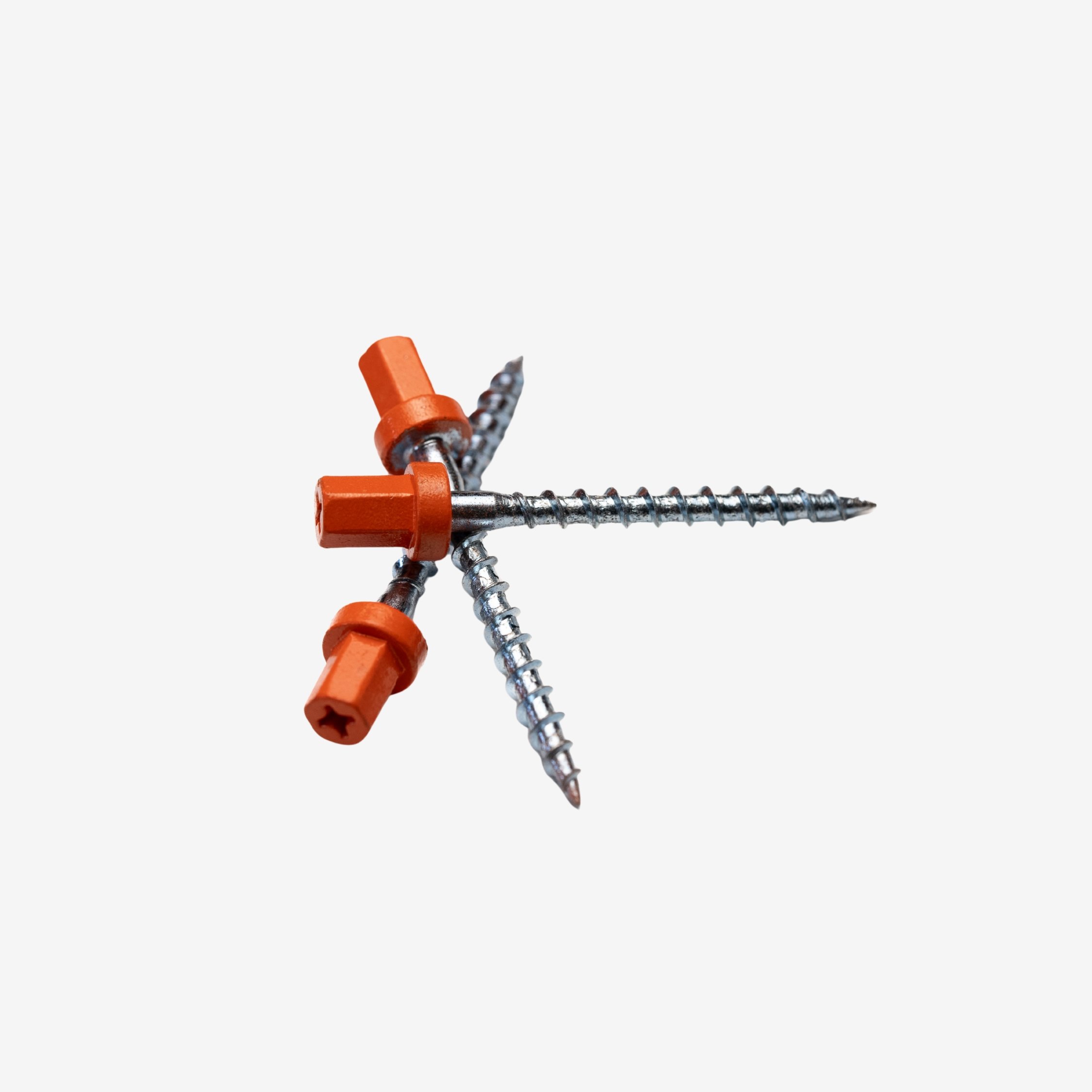
A double‑headed screw combines the visibility and accessibility of a raised head with the control, holding power, and removability of a screw. The raised upper head stays exposed, making fasteners easy to find and back out after the pour—without prying, bending, or stressing the concrete.
Because removal requires rotation rather than force:
Green concrete stays intact
Forms release cleanly
Fasteners remain reusable
Time and material waste are reduced
The result is better finishes, fewer failures, and more predictable outcomes on the jobsite.
PRODUCTIVITY & JOB SAFETY
Speed and safety often go hand in hand.
In time‑based installation testing, crews were measured on how many fasteners could be installed in one minute using a drill versus a hammer. The results showed a 47% increase in productivity, with 45 screws installed compared to 24 nails driven. Faster installation reduces setup time, shortens schedules, and lowers overall labor costs.
Safety is equally critical. Hammer use is a leading cause of hand injuries in construction, commonly resulting in bruised or broken fingers and thumbs. Repeated impact during form setup and removal increases risk. Drilling, by comparison, relies on controlled motion rather than force, significantly reducing impact‑related injuries.
Hand injury claims can range from hundreds to tens of thousands of dollars, with lost‑time injuries often exceeding weeks off the job. Fewer impacts, better control, and faster installation aren’t just efficiency gains, they protect both workers and the finished work.